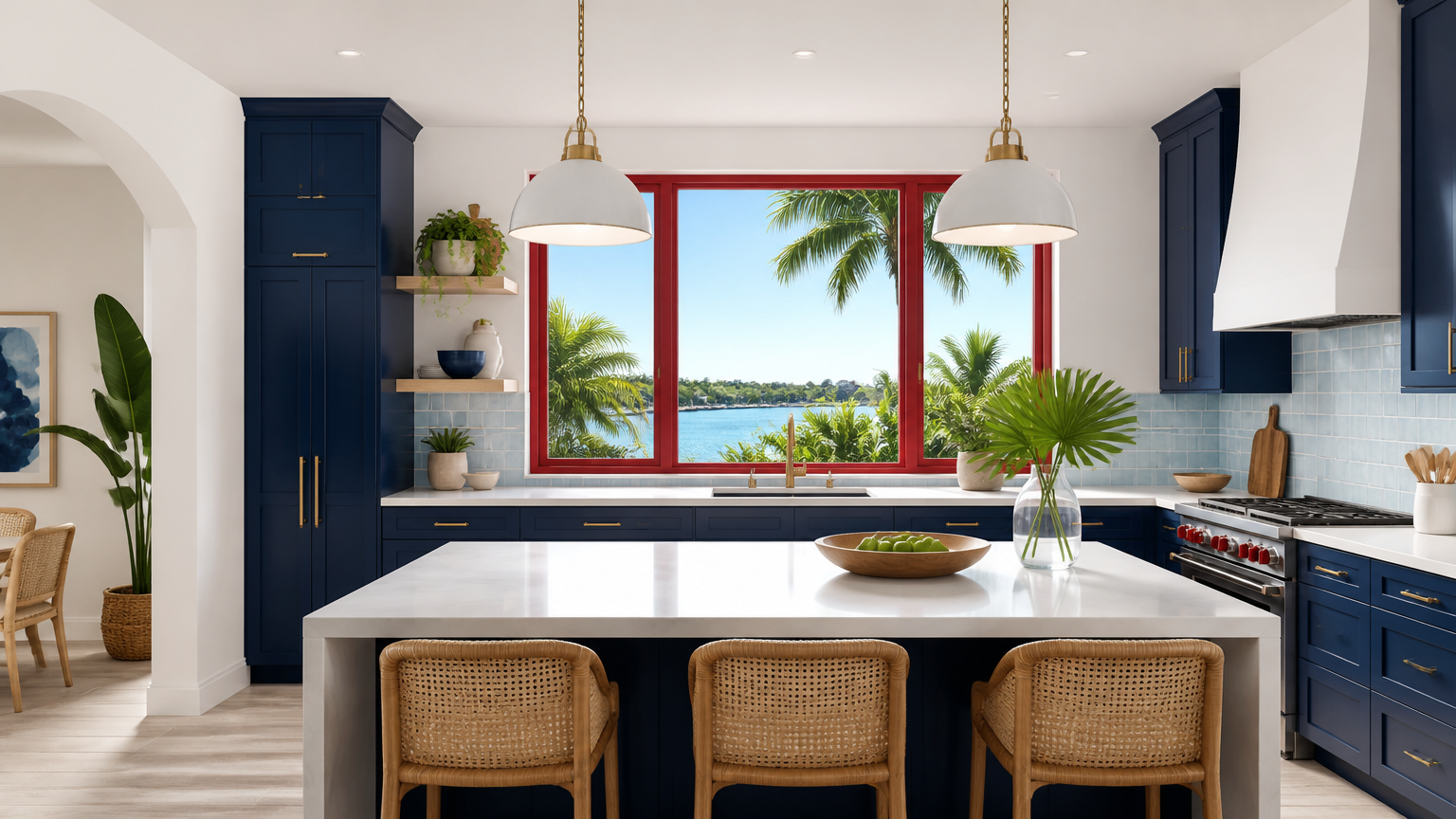
If you’re planning a kitchen, bathroom, or a comprehensive home remodel in areas like Boca Raton, Delray Beach, West Palm Beach, or Fort Lauderdale, the answer is typically yes. With the new 2024 Florida Building Code mandating impact-rated glazing for new constructions and major renovations in coastal counties, the advantages—such as reduced insurance premiums, lower cooling loads, and increased resale value—generally outweigh the initial costs.
Start by confirming the county your property is located in. For Miami-Dade, Broward, Palm Beach, and surrounding areas, the code applies to any project that modifies the building envelope or introduces a new window. If your renovation includes a new kitchen window, a bathroom skylight, or a large glass wall in the living room, you must comply with the impact-resistant windows requirement. The state’s Department of Business and Professional Regulation (DBPR) can impose fines of up to $5,000 per violation for noncompliance. To avoid these penalties, it’s advisable to hire a licensed wind-mitigation inspector to fill out the Uniform Mitigation Verification Inspection Form (OIR-B1-1802) and secure a manufacturer’s installation certificate. These documents confirm compliance with the code and appease your insurance provider.
The cost to install impact-rated glass varies between $120 and $250 per square foot, depending on the frame material and glass thickness. A usual 1,200-square-foot kitchen or bathroom facade can incur an additional $30,000 to $50,000 in structural reinforcement and permitting fees. However, many insurers provide a premium discount ranging from 5% to 20% for certified windows, and local banks often offer low-interest “hurricane-resilience” loans, which can help cover the upfront costs.
Studies by the University of Florida’s Center for Energy Research and the Florida Solar Energy Center indicate a cooling-load reduction of 12% to 30% with the installation of low-SHGC impact glass, particularly on south-facing facades. This can lead to a noticeable decrease in air-conditioning bills and a more stable indoor climate during hot months in a typical South Florida home.
For instance, a homeowner who invests $200 per square foot on impact windows for a 200-square-foot kitchen will spend approximately $40,000 initially. If the insurance discount is 15% on a $10,000 annual premium, they will save $1,500 annually. Coupled with a 20% reduction in cooling costs—approximately $1,200 a year for a mid-sized home—the payback period is around 20 years, a reasonable time frame for a major renovation. Additionally, many buyers in the region increasingly view impact windows as an essential safety feature, potentially increasing resale value by up to 5%.
When planning your renovation, create a cost-benefit worksheet that includes window area, unit cost, structural additions, financing terms, and projected savings. Collaborate with a licensed contractor who can manage the removal of old glazing, frame preparation, and installation of new units. Ensure your contractor submits the inspection report and manufacturer’s certificate to your insurer ahead of the policy renewal date. Finally, keep a copy of the DBPR compliance documentation for your records, as it may be needed to demonstrate that your home meets current hurricane-mitigation standards.
In summary, for South Florida homeowners undertaking significant renovations, installing impact-resistant windows is a sensible investment that adheres to code, lowers insurance costs, conserves energy, and aligns with buyer preferences. Following a structured approach—confirming code requirements, obtaining inspection and certification, selecting the appropriate product, and documenting compliance—can safeguard both your home and finances while enhancing value.


