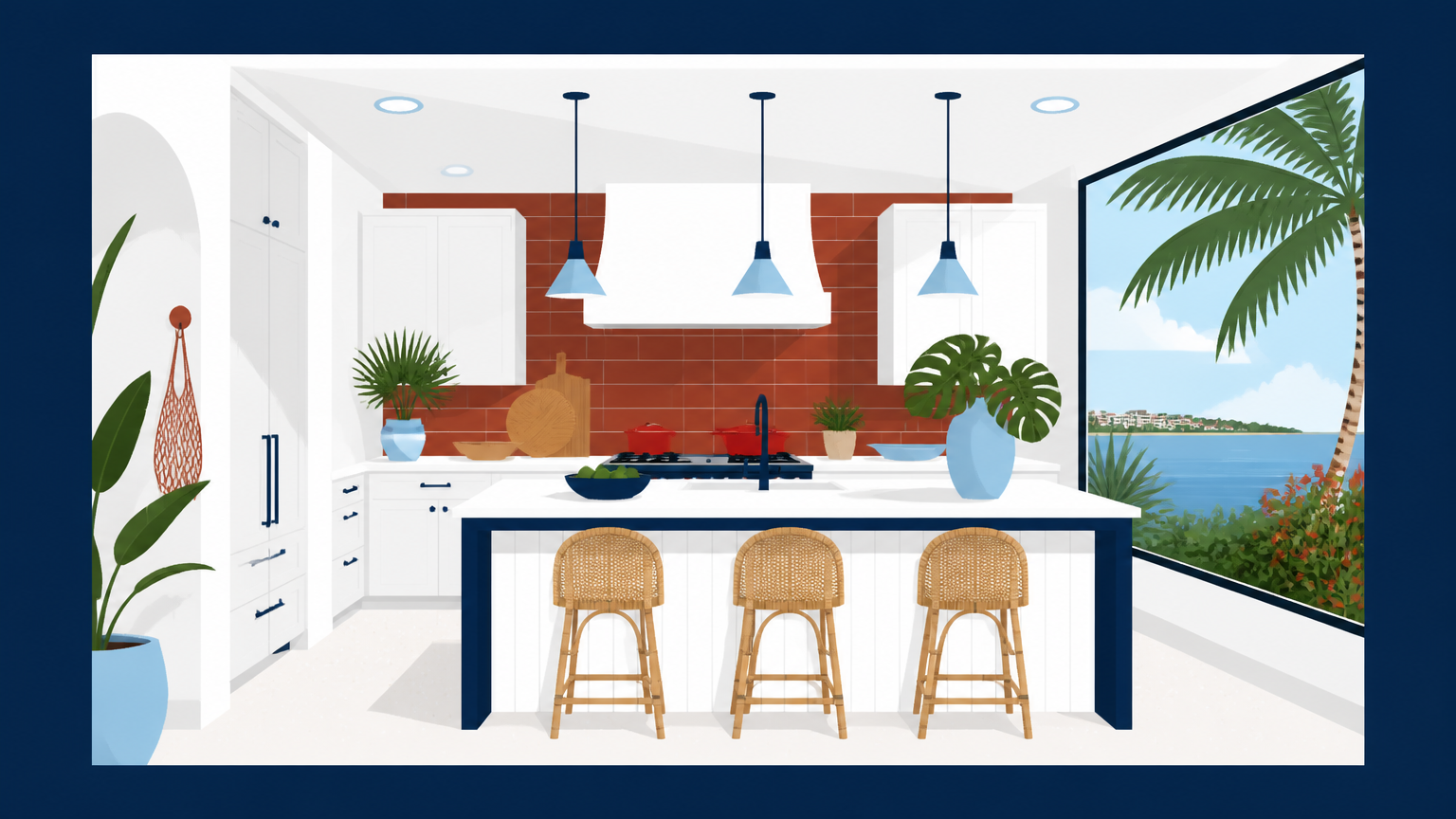
Renovating your home in South Florida means contending with unique weather challenges. The region’s humidity, coastal salt, and hurricane risks require thoughtful choices in materials and construction methods. Prioritizing durability can extend a property’s service life by 20 years or more while reducing total greenhouse gas emissions, according to peer-reviewed life-cycle assessment studies. The initial increase in costs—typically 10% to 25%—for durable options can often be redeemed through lower insurance rates, less need for upkeep, and increased property value.
Opting for durable envelopes—such as advanced concrete and impact-resistant siding—can inflate material expenses by approximately 15%. Still, an industry report released in 2023 states that builders aware of these standards are seeing 5 to 20 percent discounts from insurance companies, equating to $250-$500 yearly in savings. A net benefit usually emerges over a 20-year duration, making the investment worthwhile.
Durability further streamlines project progress. Lesser needed repairs and delayed replacements for resilient materials usually reduce project timelines. For example, a kitchen project that utilizes moisture-resistant fasteners may complete 2-3 weeks earlier than one outfitted with standard construction, leading to labor and living savings. This is counterbalanced by the increased time needed for special installations and a lower demand for permits related to repairs during the project.
The 2024 Florida Building Code now emphasizes improved moisture resistance and wind load requirements for construction in coastal areas. In Delray Beach, Boca Raton, and West Palm Beach, plans for a durable bathroom or kitchen upgrade must include a compliance document reflecting the latest floods and hurricanes standards when applying for a permit.
Acquiring a building permit grants access to incentive schemes. Certain counties boast a new home construction discount, aiming to drop the quoted insurance percentage by 10-20%. To qualify, a contractor must provide proof of durable materials like impact-ready roofing or fire-protective walls with the permit application. Utilizing a licensed contractor familiar with area requirements can help expedite the task and avert expensive hold-ups.
Anticipated laundry lists limit the project window to 15-weeks—an average time frame for a full bath and kitchen refresh—that thus incorporates optimal levels of durability.
Integrating durability is a calculated decision that reduces greenhouse gas emissions, lowers premiums, and fortifies property value against South Florida’s common weather. Using low embodied carbon materials aligned with enhanced codes can lengthen service life digits upward of 20-years, often recovering expenditures through time.
American Developer Group, a licensed Florida design/build team focused on renovations for kitchen, bath, or full home completions under local construction contractors certificates for extensive home projects, can provide you thorough assistance to navigate these issues and facilitate the durable remodel that conforms to your aspirations and consistency goals.


