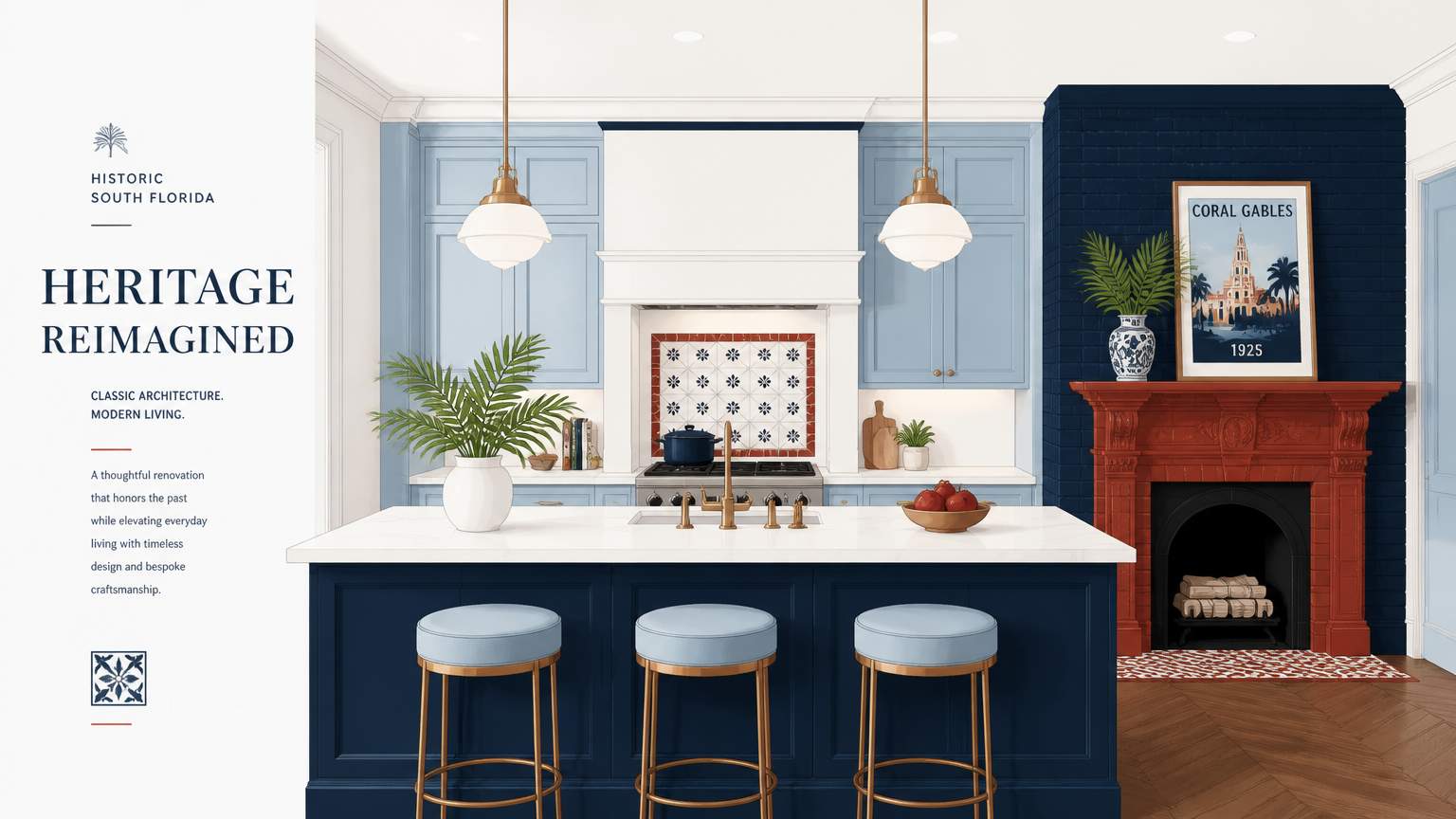
Undertaking a full remodel of kitchens and bathrooms in South Florida located in a historic district mandates obtaining a historic-preservation permit alongside usual construction permits, potentially adding 2 to 4 months for approval.
For properties situated within a historic district, start by acquiring a Certificate of Appropriateness (COA) from the relevant Historic Preservation Board. This might be the Miami‑Dade Historic and Environmental Preservation Board or Miami Beach Historic Preservation Board. Smaller changes compliant with the code can achieve administrative approval in an estimated two to four weeks. But larger renovations transforming the historic character—like major alterations, additions, or demolitions—will necessitate a complete board hearing taking approximately six to twelve weeks. Each month that a board meeting is missed adds a further month of delays. Obtaining permits for COA is just the start. Then, regular building, electrical, and plumbing permits must also be procured. Altogether, a historic remodel can take an estimated 12 to 24 months, essentially double that of a similar non‑historic project.
Check historic status and find the governing board. Collect required documentation: accurate measurements, wall types, and details about utilities and party walls. Initiate COA application; choose administrative or full hearing based on project specifications. Apply for typical construction permits post COA approval. Set up inspections and keep a detailed permit log.
Assess painted surfaces for pre‑1978 components to see if the EPA Renovation, Repair, and Painting (RRP) Rule applies. Engage a lead‑certified, safe renovation contractor. Implement containment, HEPA filtration, and clearance testing. Impact on budget: compliance adds costs between $35 and $376; cleanup and fines cost homeowners up to $195,000.
Determine floor levels, headroom, and placements of walls prior to layouts. Be considerate of airflow and avoid relying on existing fireplaces. Align interests with your neighbor’s contractor regarding party walls. Draft a phased schedule: design → permit → demolition → rough work → finishing.
Adding typical elements includes COA filing fees, board hearing fees, and expenses for lead safe preparation. The entire project finally completes in a time period of 12 to 24 months depending on complexity, compared to a standard six to twelve months.
Designation of historic status confirmed? COA filing prepared? Lead assessment complete? Party-wall documents gathered? Contractor seasoned in historic renovations?
American Developer Group operates as a licensed, Florida design-build agency, and adeptly manages historic approvals alongside full kitchen and bath remodels in areas like Boca Raton, Delray Beach, West Palm Beach, and Fort Lauderdale. Their project-management structure assigns a singular manager from design to final inspection and offers a three-year warranty for workmanship.


